
BAUER 8 Amp, 4-1/2 in. Paddle-Switch Angle Grinder
- The BAUER™ 8 Amp, 4-1/2 in. Angle Grinder features a smooth no-lock paddle switch for control in tight spaces. The high-performance 8 amp motor delivers up to 11,500 RPM for fast material removal. The adjustable 2-position side handle, tool-free guard, and spindle lock enable fast on-the-job wheel changes, minimizing downtime. This grinder is optimized for grinding, cutting, and shaping.
- Powerful 8 amp motor delivers up to 11,500 RPM
- Large paddle switch with no-lock design for increased comfort and ease of use
- Tool-free adjustable 4-1/2 in., Type 27 guard for quick, easy positioning
- 2-position side handle for added comfort and control
- Durable aluminum gear housing and rugged plastic body holds up to frequent use
- Includes 4-1/2 in., Type 27 guard, side handle, arbor nut, and wrench
$44.99

HERCULES 11 Amp, 4-1/2 in. Paddle-Switch Angle Grinder
- The HERCULES® 4-1/2 in., 11 Amp Paddle-Switch Angle Grinder is designed for professional use. The all-metal gearbox and ball bearing motor deliver professional performance in heavy applications. The paddle switch with lock-on provides control in confined spaces. This grinder is optimized for grinding, cutting, shaping, and other material removal.
- Professional 11 amp motor delivers up to 11,000 RPM
- Large paddle switch with no-lock design for increased control and ease of use
- Tool-free adjustable 4-1/2 in. Type 27 guard for quick, easy positioning
- 2-position side handle for added comfort and control
- Rugged aluminum gear case and reinforced plastic body for maximum durability
- Includes 4-1/2 in. grinding wheel, 4-1/2 in. Type 27 guard, side handle, arbor nut, and wrench
$59.99

BAUER 7 Amp, 4-1/2 in. Slide-Switch Angle Grinder
- The BAUER® 4-1/2 in. 7 Amp Angle Grinder was built for general grinding and cutting applications. The high-performance 7 amp motor delivers up to 11,000 RPM for fast material removal. The adjustable 2-position side handle and ergonomic slim body design with slide switch provide maximum comfort during extended periods of grinding and cutting. A tool-free guard and spindle lock provide fast on-the-job wheel changes, minimizing downtime. This grinder is optimized for grinding, cutting, and shaping.
- Powerful 7 amp motor delivers up to 11,000 RPM
- Slide switch locks grinder on and easily switches off
- Tool-free adjustable 4-1/2 in. Type 27 guard for quick, easy positioning
- 2-position side handle for added comfort and control
- Compact and lightweight design with durable aluminum gear housing and rugged plastic body holds up to frequent use
- Includes 4-1/2 in. Type 27 guard, side handle, arbor nut, and wrench
$26.99

WARRIOR 4.3 Amp, 4-1/2 in. Angle Grinder with Slide Switch
- The WARRIOR™ 4.3 Amp, 4-1/2 in. Angle Grinder quickly removes stock for efficient shaping, grinding, and metal cutting. The 4-1/2 in. angle grinder has a 4.3 amp motor that delivers 12,000 RPM and features an aluminum gear case for durability. The 2-position auxiliary handle adjusts to left or right hand use.
- 4.3 amp motor with up to 12,000 RPM
- Slide switch with lock-on
- Adjustable 4-1/2 in., Type 27 guard deflects debris
- 2-position side handle for added comfort and control
- Cast aluminum gear case and durable plastic body
- Includes 4-1/2 in., Type 27 guard, side handle, arbor nut, and wrench
$14.99

HERCULES 20V Brushless Cordless, 4-1/2 in./5 in. Slide-Switch Angle Grinder – Tool Only
- Powered by a high-efficiency brushless motor, the HERCULES® 20V Brushless Cordless Angle Grinder delivers up to 45% more runtime, along with 20% more power.* This grinder maintains constant power in the toughest grinding and cutting applications. The compact, lightweight frame, 2-position side handle, and lock-on switch provide ultimate comfort and control during extended periods of use. Powered by the HERCULES® Lithium Battery System, this brushless grinder goes where the job is.
- Powerful 20V brushless motor delivers up to 8500 RPM
- Slide switch locks grinder on and easily switches off
- 4-1/2 in. and 5 in. tool-free adjustable Type 27 guards for quick, easy positioning, fitting 4 in. to 5 in. wheels
- 2-position side handle for added comfort and control
- Rugged aluminum gear housing and reinforced plastic body provide maximum durability
- Includes 4-1/2 in. grinding wheel, 4-1/2 in. and 5 in. Type 27 guards, side handle, arbor nut, and wrench
$79.99
How I discovered the most versatile tool that transformed my DIY game forever
I still remember the first time I held an angle grinder in my hands. The weight, the raw power humming beneath the surface, the endless possibilities it represented – it was intimidating and exhilarating all at once. What started as a desperate attempt to cut through a rusted bolt in my garage has evolved into a decade-long love affair with what I now consider the Swiss Army knife of power tools.
If you’re reading this, chances are you’re standing where I once stood: staring at rows of angle grinders in the hardware store, overwhelmed by specifications, confused by the price ranges, and wondering if you really need another power tool cluttering up your workspace. Trust me, I’ve been there, and I’m here to guide you through everything you need to know about buying the perfect angle grinder for your needs.
What Exactly Is an Angle Grinder Used For?
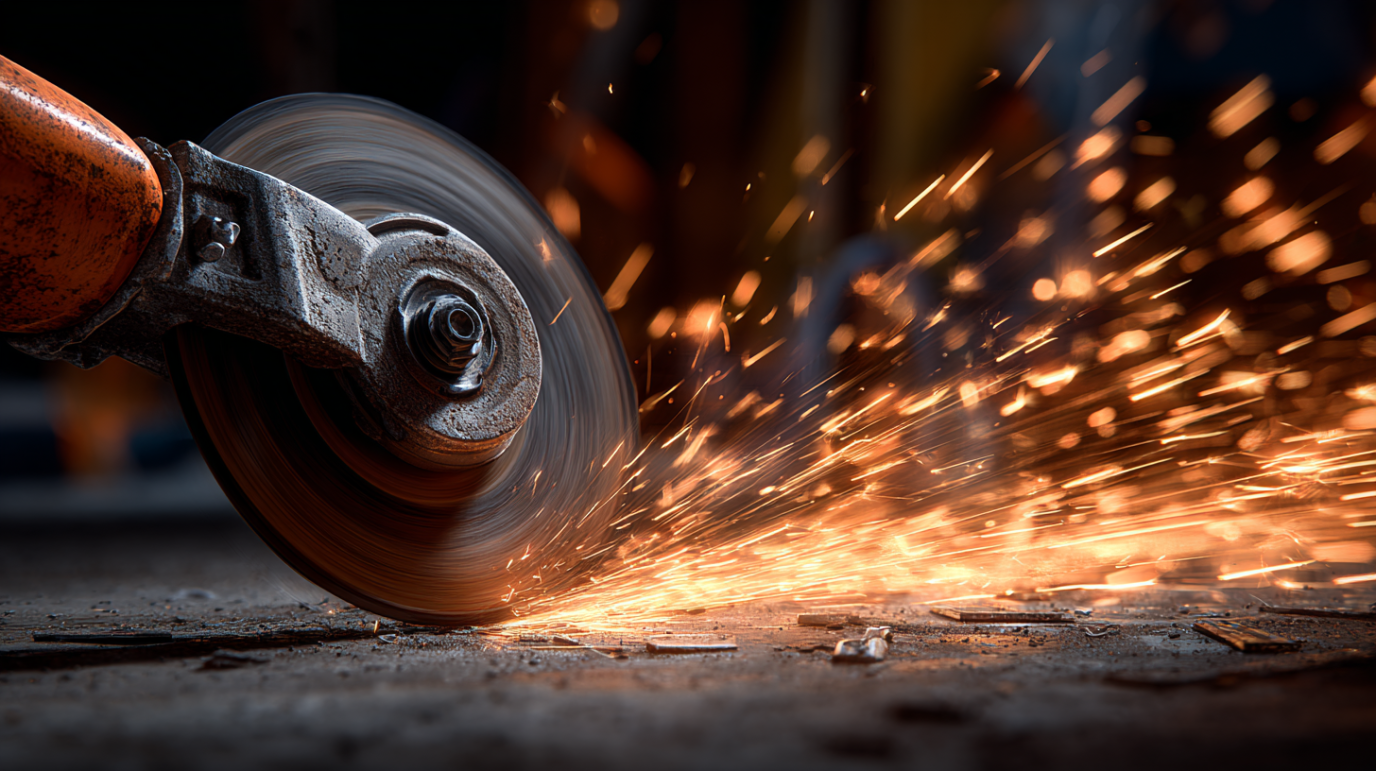
Let me paint you a picture of a typical Saturday in my workshop. I start by using my angle grinder to cut through a piece of rebar for a garden project, switch to a grinding disc to smooth out some rough welds on a metal sculpture, swap to a wire brush attachment to remove rust from an old tool, and finish the day polishing a piece of stainless steel to a mirror shine. That’s four completely different tasks, one tool – and that’s just scratching the surface.
Angle grinders are incredibly versatile tools that can handle cutting, grinding, polishing, sharpening, and surface preparation across a wide range of materials. I’ve used mine to cut ceramic tiles, sharpen lawn mower blades, remove paint from metal surfaces, and even carve intricate designs in stone. The key lies in understanding that the grinder itself is just the platform – it’s the disc or attachment you choose that determines what the tool can accomplish.
The beauty of an angle grinder lies in its aggressive cutting action and the variety of specialized discs available. Whether you’re a weekend warrior tackling home improvement projects or a professional contractor working on commercial sites, there’s likely an angle grinder configuration that can make your job easier, faster, and more precise.
How Does This Mechanical Marvel Actually Work?
Understanding how an angle grinder works completely changed how I approach my projects. At its core, an angle grinder is elegantly simple: an electric motor drives a gear system that rotates a spindle at the optimal angle for cutting and grinding operations. The “angle” in angle grinder refers to the 90-degree angle between the motor shaft and the grinding disc.
The motor typically spins at incredibly high speeds – we’re talking 11,000 to 12,000 RPM for most models. This rotation is transferred through a set of bevel gears that redirect the motion perpendicular to the motor shaft. The result is a disc that spins parallel to the surface you’re working on, providing maximum contact area and cutting efficiency.
What fascinates me most is how this simple mechanical arrangement creates such incredible versatility. The side-grinding action allows you to work in tight spaces where other tools simply can’t reach, while the high rotational speed generates the friction and cutting force needed to tackle even the toughest materials. It’s physics and engineering working in perfect harmony.
The gear reduction system also provides the necessary torque multiplication. While the motor might spin at 11,000 RPM, it’s generating relatively low torque. The gear system trades some of that speed for dramatically increased torque at the spindle, giving you the power to push through resistant materials without the motor bogging down.
Navigating the Different Types of Angle Grinders
When I first started shopping for an angle grinder, I had no idea there were so many different types available. Let me break down the main categories I’ve encountered over the years, each with its own strengths and ideal applications.
Corded angle grinders remain my go-to choice for heavy-duty work. They provide consistent power output, unlimited runtime, and typically offer the highest performance levels. I keep a robust 15-amp corded model for major projects where I need maximum cutting power and don’t want to worry about battery life. The downside? You’re tethered to a power source, which can limit mobility and create safety hazards if you’re not careful with cord management.
Cordless angle grinders have revolutionized portable grinding and cutting. Modern lithium-ion battery technology has reached the point where cordless models can deliver impressive performance while offering unmatched convenience. I use my cordless grinder for outdoor projects, automotive work, and any situation where dragging an extension cord would be impractical. The trade-off is shorter runtime and potentially reduced power compared to corded models, though the gap continues to narrow with each new generation.
Pneumatic angle grinders deserve mention, especially if you already have a compressed air system in your workshop. These tools are incredibly lightweight, generate less heat during extended use, and provide excellent speed control. However, they require a substantial air compressor and aren’t practical for most home workshops.
Size categories represent another crucial distinction. Small angle grinders (4 to 4.5 inches) excel at precision work, detail grinding, and situations where maneuverability is paramount. Medium grinders (5 to 6 inches) offer a sweet spot of power and control for most general-purpose applications. Large angle grinders (7 to 9 inches) are the heavy hitters, capable of tackling major cutting and grinding tasks but requiring more skill and respect to operate safely.
Finding the Best Angle Grinder for Home Use
After testing dozens of models over the years, I’ve developed strong opinions about what makes the best angle grinder for home use. The ideal home workshop grinder needs to balance power, versatility, safety features, and value – a combination that’s harder to achieve than you might think.
For most homeowners, I recommend starting with a 4.5-inch corded angle grinder in the 6 to 10-amp range. This size provides enough power for most household tasks while remaining manageable for users who might not have extensive experience with aggressive power tools. The 4.5-inch disc size offers excellent control and precision, making it ideal for everything from cutting rebar and pipe to grinding welds and sharpening tools.
My current favorite for home use is a 7-amp model with an adjustable guard, auxiliary handle, and tool-free disc changing system. The power level handles most residential tasks without being overwhelming, while the safety features provide peace of mind during operation. The tool-free disc changing capability is a game-changer when you’re switching between different tasks – there’s nothing more frustrating than hunting for a wrench every time you need to swap discs.
Safety features should be non-negotiable in any home workshop grinder. Look for models with adjustable guards that can be positioned to deflect sparks and debris away from your body. A dead-man switch or paddle switch provides instant shut-off capability if you lose control. Some modern grinders include electronic features like soft-start motors that reduce kickback during startup and electronic speed control that maintains consistent performance under load.
Build quality becomes especially important for home users who might not replace their tools as frequently as professionals. I’ve learned to focus on models with robust gear cases, quality bearings, and good motor cooling systems. These features ensure your grinder will provide years of reliable service even with occasional heavy use.
Mastering Safe Angle Grinder Operation
How to use an angle grinder safely is perhaps the most important topic I can discuss. These tools demand respect – they’re capable of causing serious injury if mishandled, but they’re remarkably safe when operated with proper technique and precautions.
My safety routine starts before I even plug in the grinder. I always inspect the disc for cracks, chips, or other damage that could cause failure during operation. A disc spinning at 11,000 RPM contains enormous energy, and a failure can send fragments flying at dangerous velocities. I’ve seen perfectly good discs shatter due to improper storage or handling, so this inspection step is never optional.
Personal protective equipment is absolutely essential. I never operate an angle grinder without safety glasses – preferably a full face shield for heavy grinding operations. The sparks and debris generated during cutting and grinding can cause serious eye injuries, and I’ve seen too many close calls to take chances. Hearing protection is equally important, as angle grinders operate at noise levels that can cause permanent hearing damage with extended exposure.
Proper grip and stance make an enormous difference in both safety and performance. I always use both hands when operating an angle grinder – one on the main handle and one on the auxiliary side handle. This two-handed grip provides much better control and reduces the risk of the tool being pulled from your hands if the disc binds. Your stance should be stable and balanced, with your body positioned so that if the grinder kicks back, it won’t contact your torso or face.
Understanding kickback is crucial for safe operation. Kickback occurs when the disc binds in the cut or makes contact with the workpiece at the wrong angle. The grinder can violently jerk in any direction, potentially causing loss of control. I avoid kickback by maintaining steady feed pressure, keeping the grinder moving through cuts, and never forcing the tool beyond its capabilities.
The work environment plays a huge role in safety. I always ensure adequate ventilation when grinding, as the process can generate harmful dust and fumes. A proper workbench or clamping system secures the workpiece, allowing me to focus on controlling the grinder rather than trying to hold the work steady. Clear sight lines and good lighting prevent accidents caused by poor visibility.
Choosing the Right Size Angle Grinder
What size angle grinder do I need? is a question I get constantly from fellow DIY enthusiasts. The answer depends on the type of work you’ll be doing, your experience level, and your physical capabilities. Size affects everything from cutting capacity to weight, speed to safety requirements.
4.5-inch angle grinders are my recommendation for most beginners and general home use. They’re lightweight, maneuverable, and forgiving while still providing substantial cutting and grinding capability. The smaller disc size means less aggressive cutting action, which translates to better control and reduced fatigue during extended use. I can operate my 4.5-inch grinder single-handed when necessary (though I don’t recommend it), and it’s perfect for detail work and precision grinding.
The cutting depth limitation of smaller grinders is something to consider. A 4.5-inch disc typically cuts to a depth of about 1.5 inches, which handles most residential cutting tasks but might fall short for heavy structural work. For cutting thick steel beams or large pipes, you might need to make multiple passes or consider a larger grinder.
7-inch angle grinders represent a significant step up in capability and complexity. These tools can cut through much thicker materials in a single pass and remove material much more quickly during grinding operations. However, they’re substantially heavier, generate more torque, and require more skill to operate safely. I use my 7-inch grinder primarily for major demolition work and heavy material removal where the extra capability justifies the increased difficulty in handling.
9-inch angle grinders are truly professional tools that most home users don’t need. They’re heavy, powerful, and can be genuinely dangerous in inexperienced hands. Unless you’re regularly cutting through 4-inch thick steel or doing professional concrete work, smaller sizes will serve you better.
Consider your physical capabilities honestly when choosing grinder size. A 7-inch grinder might seem appealing for its extra cutting capacity, but if you can’t comfortably control it throughout an entire project, you’ll be less productive and much less safe than with a smaller model you can handle confidently.
Corded vs. Cordless: The Great Debate
The difference between corded and cordless angle grinders goes far beyond the obvious power source distinction. Each type excels in different situations, and understanding these strengths will help you choose the right tool for your specific needs.
Corded angle grinders provide consistent, unlimited power that doesn’t diminish as you work. My 15-amp corded model can run continuously for hours without any performance degradation, making it ideal for large projects or professional use. The power-to-weight ratio tends to be better with corded models, as you’re not carrying battery weight, and the cost per unit of cutting capacity is typically lower.
The limitations of corded grinders become apparent in certain working conditions. Extension cord management can be a real challenge, especially in tight spaces or when working outdoors. I’ve learned to invest in high-quality, properly sized extension cords to minimize voltage drop and ensure full performance. The cord also represents a potential safety hazard if not properly managed – I’ve seen too many cut extension cords and tripping incidents to take this lightly.
Cordless angle grinders have transformed how I approach many projects. The freedom to work anywhere without worrying about power sources is liberating, especially for automotive work, outdoor projects, or construction sites where power might not be readily available. Modern lithium-ion batteries provide impressive runtime, and the convenience factor often outweighs the performance limitations.
Battery life remains the primary limitation of cordless grinders. Heavy cutting and grinding operations drain batteries quickly, and having adequate battery capacity for a full day’s work requires significant investment in multiple battery packs and chargers. The initial cost per unit of cutting capacity is higher with cordless tools, though this gap continues to narrow as battery technology improves.
Performance characteristics differ between corded and cordless models in subtle but important ways. Cordless grinders often include electronic features like brushless motors and speed control systems that can actually provide superior performance in some situations. However, the absolute peak power of corded models remains higher, making them better for the most demanding applications.
My recommendation for most users is to start with a quality corded grinder for workshop use, then add a cordless model later if your work patterns justify the convenience. This approach provides the best of both worlds while allowing you to learn angle grinder techniques with the more predictable power delivery of corded tools.
Mastering Disc Changes and Maintenance
Learning how to change the disc on an angle grinder safely and efficiently is fundamental to getting the most from your tool. I’ve developed a systematic approach that ensures both safety and disc longevity while minimizing downtime during projects.
The first step is always allowing the grinder to cool completely before attempting disc changes. The friction generated during cutting and grinding creates substantial heat, and I’ve burned myself more than once by being impatient with hot discs and spindles. Even if you’re in a hurry, taking five minutes for cooling can prevent painful burns and ensure proper disc seating.
Proper disc installation is critical for both performance and safety. I always inspect the spindle threads and backing flange for damage or debris before installing a new disc. Any burrs or accumulated material on these components can prevent proper disc seating, leading to wobble, vibration, and potential disc failure. A few seconds spent cleaning these components can prevent hours of frustration and potential injury.
The backing flange must seat completely flat against the disc, with the raised hub centered in the disc’s mounting hole. I hand-tighten the outer flange just enough to secure the disc, then use the spindle lock and appropriate wrench to achieve final tightness. Over-tightening can distort the disc or damage the spindle threads, while under-tightening allows the disc to slip or come loose during operation.
Tool-free disc changing systems have revolutionized this process on many modern grinders. These systems use a quick-release mechanism that eliminates the need for wrenches while maintaining secure disc mounting. I initially was skeptical of these systems, concerned about their ability to maintain proper clamping force, but experience has proven them to be both convenient and reliable when properly maintained.
Regular maintenance extends angle grinder life significantly. I clean my grinders after every major project, paying particular attention to ventilation slots and the motor housing. Accumulated dust and debris can interfere with motor cooling, leading to premature failure. The gear case should be checked periodically and regreased according to the manufacturer’s schedule – this simple maintenance step can double or triple gear life.
Brush inspection and replacement is crucial for brushed motors. Worn brushes reduce power output and can damage the motor commutator if allowed to wear completely. I check brush length every few months and replace them when they’ve worn to about 1/4 inch length. It’s a simple maintenance task that prevents expensive motor repairs.
Cutting Metal: Techniques and Best Practices
Can an angle grinder be used to cut metal? Absolutely – it’s one of their primary functions and something I do almost daily in my workshop. However, successful metal cutting requires understanding the right techniques, choosing appropriate discs, and maintaining proper safety practices throughout the operation.
Cutting disc selection is crucial for good results and safety. I use thin cutting wheels (typically 1/16 to 1/8 inch thick) for most metal cutting operations. These discs cut quickly with minimal material removal, producing clean cuts with relatively little heat generation. Thicker discs can be used for heavy-duty cutting but remove more material and generate more heat, which can affect the properties of heat-sensitive metals.
Proper cutting technique makes an enormous difference in both cut quality and disc life. I always start cuts slowly, allowing the disc to establish a groove before applying full cutting pressure. Forcing the grinder or trying to cut too aggressively causes disc binding, overheating, and premature wear. Maintaining steady forward motion through the cut prevents the disc from dwelling in one area and overheating the material.
Support is critical when cutting longer pieces. I use sawhorses or a cutting table to support both sides of the cut, preventing the workpiece from pinching the disc as the cut progresses. For sheet metal, I often clamp a straight edge to guide the cut and prevent the material from vibrating, which can cause rough cuts and disc damage.
Different metals require slightly different approaches. Steel cuts readily with standard abrasive cutting discs, but I’ve learned that stainless steel benefits from specialized discs designed for its specific properties. Aluminum requires even more care – the metal’s tendency to clog cutting discs means using discs specifically designed for non-ferrous metals and maintaining steady motion through cuts.
Cooling becomes important for thicker cuts or when working with heat-sensitive materials. I sometimes use cutting fluid or even water cooling for challenging cuts, though this requires extreme care to prevent electrical hazards with corded grinders. For most home workshop applications, allowing cuts to cool between passes and using sharp, appropriate discs provides adequate heat control.
Woodworking Applications and Specialized Discs
While angle grinders aren’t traditional woodworking tools, I’ve discovered numerous applications where they excel beyond conventional woodworking equipment. The best angle grinder for woodworking depends on the specific tasks you’re undertaking, but any quality 4.5-inch model with good speed control will handle most wood-related applications effectively.
Wood carving represents one of the most creative applications I’ve explored with angle grinders. Using specialized carving discs, I can remove material quickly for rough shaping, then switch to finer grits for detail work. The aggressive cutting action allows for artistic techniques that would be time-consuming or impossible with traditional carving tools. However, this application requires significant skill development and absolute attention to safety – the margin for error is much smaller than with traditional woodworking tools.
Sanding and surface preparation are more practical applications for most woodworkers. I use my angle grinder with sanding discs for rapid material removal when leveling uneven surfaces, removing old finishes, or preparing rough lumber. The tool excels at tasks where traditional sanders would be too slow or lack sufficient aggressiveness. Flap discs work particularly well for this application, providing aggressive material removal capability while leaving a surface suitable for further finishing.
Paint and finish removal is another area where angle grinders shine. Wire brush attachments make quick work of removing old paint from wooden structures, while specialized stripping discs can remove multiple layers of finish without damaging the underlying wood. I’ve used this technique extensively for furniture restoration and exterior maintenance projects.
Safety considerations become even more critical when working with wood due to fire risk. Wood dust is highly flammable, and the sparks generated by angle grinders can easily ignite accumulated debris. I always ensure adequate ventilation and dust collection when grinding wood, and I never allow dust to accumulate around the work area. Having appropriate fire suppression equipment nearby is prudent when doing extensive wood grinding.
Specialized wood cutting discs allow angle grinders to tackle some cutting tasks, though they’ll never replace dedicated woodworking saws for precision work. These discs excel at rough cuts, especially in situations where conventional saws can’t reach or where the aggressive cutting action is beneficial. I’ve used wood cutting discs for demolition work, root cutting in landscaping, and rough shaping of timber structures.
Understanding Disc Size Impact: 4.5-inch vs. 7-inch
The difference between a 4.5-inch and 7-inch angle grinder extends far beyond the obvious size distinction. These tools operate differently, have different capabilities, and require different approaches to achieve optimal results safely.
Cutting capacity represents the most obvious difference. My 4.5-inch grinder typically cuts to a depth of about 1.5 inches, which handles most home workshop tasks adequately. The 7-inch grinder cuts to approximately 2.5 inches depth, allowing single-pass cuts through much thicker materials. This capability difference becomes crucial when working with structural steel, thick pipe, or heavy fabrication projects.
Speed characteristics vary significantly between sizes. While both types typically operate around 11,000 RPM, the larger disc on a 7-inch grinder travels much faster at its periphery. This increased surface speed provides more aggressive cutting and grinding action but also requires more care in handling. The larger disc stores more kinetic energy, making kickback events more violent and potentially dangerous.
Weight and handling characteristics differ substantially. My 4.5-inch grinder weighs about 4 pounds and can be maneuvered easily in tight spaces or overhead applications. The 7-inch model weighs nearly 8 pounds and requires two-handed operation at all times. The larger tool generates more torque reaction, making it more challenging to control, especially during startup or when the disc binds.
Power requirements scale with disc size. Most 4.5-inch grinders operate effectively on 6 to 10 amps, while 7-inch models typically require 12 to 15 amps for optimal performance. This power difference affects not only cutting capability but also the electrical requirements in your workshop. Larger grinders may require 20-amp circuits or appropriately sized extension cords to prevent voltage drop and performance degradation.
Material removal rates favor larger grinders significantly. When I’m doing heavy grinding work like weld preparation or surface conditioning, the 7-inch grinder removes material much more quickly than its smaller counterpart. However, this aggressiveness can be a disadvantage for precision work or when working near finished surfaces where material removal control is critical.
Heat generation and management differ between sizes. Larger grinders typically have better cooling systems and larger mass to absorb heat, allowing for longer continuous operation. However, they also generate more heat during operation due to their higher power levels and more aggressive cutting action. Understanding these thermal characteristics helps prevent overheating and extends tool life.
Selecting the Perfect Disc for Every Task
How to choose the right disc for an angle grinder is perhaps the most important skill I’ve developed over years of use. The disc determines what your grinder can accomplish, how well it performs, and how safely it operates. Having the right disc for each task transforms the angle grinder from a crude tool into a precision instrument.
Cutting discs come in numerous varieties, each optimized for specific materials and applications. Standard abrasive cutting wheels work well for general steel cutting and are economical for high-volume work. I keep several thicknesses on hand – thin wheels (1/16 inch) for sheet metal and precision cuts, and thicker wheels (1/8 inch) for heavier structural work. The thicker discs last longer but remove more material and generate more heat.
Specialized cutting discs make enormous differences in specific applications. Stainless steel cutting discs contain different abrasive compositions that prevent loading and maintain cutting efficiency in this challenging material. Aluminum cutting discs feature coatings and abrasive types that resist clogging from the soft metal. Diamond cutting discs excel for masonry, tile, and concrete applications, providing clean cuts with minimal chipping.
Grinding discs serve different purposes than cutting discs and require different selection criteria. Type 27 grinding wheels have raised hubs that allow aggressive surface grinding, making them ideal for weld preparation and heavy material removal. I use these for rough shaping and when I need to remove substantial amounts of material quickly.
Type 29 flap discs combine grinding and finishing capabilities in one disc. The overlapping abrasive flaps provide consistent surface finish while removing material at a controlled rate. I find these invaluable for blending welds, removing scratches, and preparing surfaces for finishing. They’re available in various grits, from coarse (36 grit) for heavy material removal to fine (120 grit) for final finishing.
Wire brushes and specialty attachments expand grinder capabilities into surface preparation and cleaning applications. Crimped wire wheels excel at paint removal and rust cleaning, while knotted wire wheels provide more aggressive action for heavy cleaning tasks. I’ve found that twisted knot wheels work particularly well for cleaning welds and removing scale from hot-rolled steel.
Sanding discs transform the angle grinder into a powerful surface preparation tool. Fiber-backed sanding discs withstand the aggressive action of angle grinding while providing consistent material removal. I use coarse grits (24 to 36) for rapid stock removal and finer grits (80 to 120) for surface preparation before finishing.
Polishing applications require yet another category of discs and compounds. Felt wheels with polishing compounds can bring metal surfaces to mirror finishes, while specialized buffing wheels work well for automotive and decorative applications. The key to successful polishing is starting with properly prepared surfaces and progressing through increasingly fine compounds.
Surface Polishing Techniques and Applications
Can an angle grinder be used to polish surfaces? This question opened up an entirely new world of applications for me. With the right attachments and techniques, angle grinders can produce surprisingly sophisticated surface finishes, from satin textures to mirror-bright polishes.
The secret to successful polishing lies in progressive grit progression and proper technique. I always start with the finest grit that will remove existing scratches and surface imperfections, then progress through increasingly fine grits until I achieve the desired finish. Jumping too quickly between grit levels leaves scratch patterns that become increasingly difficult to remove with finer abrasives.
Surface preparation is absolutely critical for quality polishing results. Any deep scratches, gouges, or surface irregularities must be removed before beginning the polishing process. I typically start with 80 to 120-grit sanding discs to level the surface and remove major imperfections, then progress through 220, 320, and 400-grit stages before moving to polishing compounds.
Felt polishing wheels work exceptionally well for final finishing operations. I charge these wheels with appropriate polishing compounds – cutting compounds for initial polishing stages and fine polishing compounds for final mirror finishes. The key is maintaining consistent motion and pressure while avoiding overheating the workpiece, which can cause compound breakdown and surface damage.
Speed control becomes crucial for polishing applications. Most angle grinders operate at fixed speeds optimized for cutting and grinding, which can be too aggressive for polishing. I’ve learned to use light pressure and intermittent contact to prevent overheating while still achieving good material removal rates. Some newer grinders include variable speed controls that make polishing much easier.
Different materials require different polishing approaches. Stainless steel responds well to progressive polishing with silicon carbide compounds, while aluminum benefits from specialized compounds designed for soft metals. Chrome and other plated surfaces require extremely gentle techniques to avoid damaging the plating layer.
The polishing environment affects results significantly. Dust and contamination can embed in soft polishing wheels, creating scratches in subsequent operations. I always work in clean conditions and frequently clean polishing wheels during use. Proper lighting is essential for evaluating finish quality and identifying areas that need additional attention.
Professional Tool Sharpening Techniques
How to sharpen tools with an angle grinder has become one of my most valued skills. With proper technique and appropriate grinding wheels, an angle grinder can restore cutting edges on everything from lawn mower blades to woodworking chisels, often producing results superior to commercial sharpening services.
Lawn mower blade sharpening is probably the most common application I tackle. The high material removal rate of angle grinders makes quick work of restoring severely damaged or dull blades. I use a coarse grinding wheel (36 to 60 grit) for initial shaping and removing nicks, then switch to a finer wheel (80 to 120 grit) for final edge refinement. Maintaining the original bevel angle is crucial for proper cutting performance and blade balance.
The key to successful blade sharpening is understanding bevel angles and maintaining consistency. Most lawn mower blades have approximately 45-degree bevels, though this varies by manufacturer and blade design. I use an angle guide or steady rest when possible to maintain consistent angles throughout the sharpening process. Freehand sharpening is possible with practice but requires developing good muscle memory and visual references.
Heat management becomes critical when sharpening hardened steel tools. Excessive heat can destroy the temper of tool steel, making edges soft and unable to hold sharpness. I use light pressure and frequent cooling intervals when sharpening chisels, plane irons, and other woodworking tools. Some operators use water cooling during grinding, though this requires extreme caution to prevent electrical hazards.
Chain saw chain sharpening represents a specialized application where angle grinders can excel with proper setup. Round grinding stones matched to the chain pitch can restore cutting performance much more quickly than hand filing. However, this application requires significant skill development and specialized fixtures to maintain proper angles and depths.
Drill bit sharpening is possible with angle grinders but requires considerable skill and appropriate grinding wheels. The complex geometry of drill bit cutting edges makes this challenging for beginners, but experienced operators can achieve excellent results. I primarily use this technique for larger drill bits where replacement costs justify the time investment in sharpening.
Garden tool maintenance represents another practical application. Hoes, axes, shovels, and other edge tools benefit from periodic sharpening with angle grinders. The aggressive cutting action removes nicks and damage quickly, while proper technique can restore factory-sharp edges that make outdoor work much easier and more efficient.
Understanding RPM and Performance Characteristics
The RPM of a typical angle grinder fundamentally determines its cutting characteristics, performance capabilities, and appropriate applications. Most consumer and professional angle grinders operate at approximately 11,000 RPM, though this can vary from 8,000 to 12,000 RPM depending on size and intended application.
Understanding why this speed range is optimal requires considering the relationship between disc diameter, surface speed, and cutting efficiency. At 11,000 RPM, a 4.5-inch disc achieves a surface speed of approximately 64 miles per hour at its periphery. This combination of rotational speed and surface velocity provides optimal cutting performance for most materials while remaining manageable from a safety perspective.
Different materials respond differently to various speeds. Hard materials like steel and masonry benefit from high surface speeds that generate sufficient friction for effective cutting. Softer materials like aluminum or plastic can clog cutting discs at high speeds, sometimes benefiting from slower operation. Unfortunately, most angle grinders operate at fixed speeds, requiring technique adjustments rather than speed changes to optimize performance.
The relationship between RPM and disc size creates important performance differences. A 7-inch disc operating at 8,500 RPM achieves approximately the same surface speed as a 4.5-inch disc at 11,000 RPM. This is why larger grinders typically operate at lower RPMs – they achieve similar cutting performance while reducing stress on the disc and improving operator control.
Motor characteristics affect how RPM translates to actual performance. Universal motors used in most angle grinders maintain relatively constant speed under varying loads, providing consistent cutting performance as material resistance changes. Brushless motors in some cordless models can actually increase efficiency by optimizing motor speed for changing load conditions.
No-load RPM specifications don’t tell the complete performance story. The motor’s ability to maintain speed under load is more important for sustained cutting performance. Quality grinders maintain RPM better under load, providing more consistent cutting rates and reducing the tendency for discs to bind or grab during operation.
Comprehensive Cleaning and Maintenance Protocols
How to clean and maintain an angle grinder properly can extend tool life dramatically while ensuring consistent performance and safety. I’ve developed systematic maintenance routines that keep my grinders running smoothly for years of heavy use.
Post-use cleaning should be routine after every significant project. I start by allowing the grinder to cool completely, then use compressed air to blow debris from motor vents, gear housing, and internal components accessible through ventilation slots. Accumulated dust and debris interfere with motor cooling and can cause premature failure, especially when working with materials that generate fine particles.
The spindle and threading require particular attention during cleaning. Metal particles and debris can accumulate on these precision surfaces, interfering with proper disc mounting and potentially causing disc wobble or failure. I use a wire brush to clean threads and inspect the spindle for wear or damage that might affect disc performance.
Lubrication maintenance varies significantly between grinder designs. Some models have sealed gear cases that require no maintenance, while others need periodic regreasing. I check the manufacturer’s specifications and follow recommended intervals religiously. Over-lubrication can cause problems by attracting debris, while under-lubrication leads to premature gear wear and failure.
Motor brush inspection and replacement is crucial for brushed motor models. Worn brushes reduce performance and can damage the motor commutator if allowed to wear completely. I inspect brush length every few months of heavy use and replace brushes when they reach approximately 1/4 inch length. This preventive maintenance prevents expensive motor repairs.
Storage conditions affect grinder longevity significantly. I store my grinders in dry conditions to prevent corrosion, and I remove discs during long-term storage to prevent stress on spindle bearings. Proper storage also includes coiling cords loosely to prevent wire damage and protecting switches and adjustment mechanisms from debris.
Preventive maintenance includes periodic performance checks to identify developing problems before they cause failures. I monitor motor noise, vibration levels, and cutting performance for changes that might indicate bearing wear, gear problems, or motor issues. Early detection allows for repairs before complete failure and often results in lower repair costs.
Common Mistakes and How to Avoid Them
What are the common mistakes when using an angle grinder? Over the years, I’ve made virtually every mistake possible with these tools, and I’ve observed countless others making similar errors. Learning from these mistakes has made me a safer, more effective operator.
Improper disc selection ranks as the most common mistake I see. Using cutting discs for grinding operations, or grinding discs for cutting, creates safety hazards and poor results. Cutting discs are thin and designed for straight cuts – side loading them during grinding can cause catastrophic failure. Similarly, trying to cut with thick grinding discs is inefficient and can cause dangerous binding.
Excessive pressure represents another frequent error that reduces both safety and effectiveness. Angle grinders work best with moderate, consistent pressure that allows the disc to do the work. Forcing the tool causes overheating, premature disc wear, and increased risk of kickback. I’ve learned that patience and proper technique produce better results than brute force.
Neglecting personal protective equipment is unfortunately common, especially among experienced users who become complacent. I’ve seen serious injuries result from this complacency, and I now maintain strict PPE discipline regardless of how routine the task might seem. Safety glasses, hearing protection, and appropriate clothing are never optional.
Improper work support causes numerous problems and safety hazards. Trying to cut unsupported material leads to binding, kickback, and poor cut quality. I always ensure workpieces are properly supported and secured before beginning operations. This preparation step prevents many common accidents and produces much better results.
Cord management problems plague many operators of corded grinders. Extension cords that are too small cause voltage drops and reduced performance, while damaged cords create serious electrical hazards. I’ve learned to inspect cords regularly and use properly sized extensions for the power requirements of my grinders.
Failure to maintain proper technique during operation leads to fatigue, poor results, and increased accident risk. I see operators trying to use angle grinders single-handed, working from awkward positions, or attempting cuts beyond their skill level. Maintaining proper stance, grip, and positioning is essential for both safety and effectiveness.
Ignoring manufacturer recommendations for disc compatibility and operating procedures is surprisingly common. Different grinder models have specific requirements for disc types, maximum thicknesses, and operating procedures. I always read and follow manufacturer guidelines, especially when using a new grinder or unfamiliar disc type.
Concrete Grinding Applications and Techniques
Can an angle grinder be used for concrete grinding? Absolutely, and it’s become one of my most valuable applications for surface preparation, repair work, and decorative concrete projects. However, concrete grinding requires specialized equipment and techniques that differ significantly from metal cutting and grinding operations.
Diamond grinding discs are essential for effective concrete work. Unlike abrasive discs used for metal, diamond discs use industrial diamonds embedded in metal matrices to cut through concrete’s abrasive aggregate. I use different diamond disc types depending on the concrete hardness and desired finish – soft-bond discs for hard concrete and hard-bond discs for soft concrete.
Surface preparation represents the most common concrete grinding application in my workshop. When installing tile or other flooring materials, achieving proper surface profile is crucial for adhesion. I use my 4.5-inch grinder with appropriate diamond discs to remove surface laitance, open pores, and create the texture specified for the flooring system.
Dust control becomes absolutely critical when grinding concrete. The silica dust generated during concrete grinding poses serious health hazards and can damage equipment. I always use dust collection systems or wet cutting techniques when possible. For dry grinding, proper respiratory protection and ventilation are non-negotiable requirements.
Repair work applications include removing damaged concrete sections, preparing surfaces for patching compounds, and blending repair areas with existing surfaces. The aggressive cutting action of angle grinders removes deteriorated concrete quickly while allowing precise control over removal depth and area.
Decorative concrete applications have expanded significantly with the growth of polished concrete flooring. While large concrete polishers handle most production work, angle grinders excel for detail areas, edges, and repair work within larger polishing projects. Understanding grit progressions and proper technique allows achieving surprisingly sophisticated finishes.
Tool requirements for concrete grinding differ from standard metalworking applications. Concrete generates tremendous amounts of debris that can clog standard grinders, so models with improved dust sealing and cooling systems perform much better. Some manufacturers offer concrete-specific grinders with enhanced protection against concrete dust infiltration.
Investment Considerations and Value Analysis
How much does a good angle grinder cost? is a question that requires understanding the relationship between price, performance, and intended use. After purchasing dozens of grinders over the years, I’ve learned that the initial purchase price represents only part of the total ownership cost.
Entry-level angle grinders typically cost $30 to $60 and can provide adequate performance for occasional home use. These tools often feature basic motors, minimal safety features, and shorter warranties, but they can handle light-duty cutting and grinding tasks effectively. I recommend this category for users who need an angle grinder infrequently and don’t require professional-grade performance.
Mid-range grinders in the $80 to $150 price range offer significantly better performance, durability, and safety features. These tools typically include more powerful motors, better construction quality, and enhanced safety systems like adjustable guards and dead-man switches. This category represents the sweet spot for most serious home users and light professional applications.
Professional-grade grinders cost $150 to $400 and provide the performance and durability required for daily commercial use. These tools feature robust construction, advanced safety systems, and often include electronic features like soft-start motors and speed control. The higher initial cost is justified by longer service life and better performance under demanding conditions.
Specialty and high-end grinders can exceed $500 and are typically designed for specific applications or extreme duty cycles. These might include large grinders for heavy industrial use, specialized models for concrete work, or high-precision grinders for manufacturing applications. Most home users don’t need tools in this category.
Total cost of ownership includes consumables like discs, maintenance requirements, and replacement costs. Higher-quality grinders often use standard disc sizes and threading, making consumables more readily available and affordable. They also typically require less frequent repairs and last longer, reducing the annualized cost of ownership.
Value analysis should consider intended use patterns. A professional contractor using a grinder daily justifies premium tool investment, while a homeowner using it monthly might be better served by a mid-range model. Matching tool capability to actual requirements prevents both under-buying and over-buying.
The used tool market can provide excellent value for quality grinders. Professional-grade tools often retain their performance capabilities even after years of commercial use, and they can be purchased at significant discounts. However, buying used requires careful inspection and understanding of potential repair costs.
Making Your Final Decision
After covering all these aspects of angle grinder buying, the decision ultimately comes down to honest assessment of your needs, capabilities, and budget. I’ve learned that the best angle grinder is the one you’ll actually use safely and effectively for your specific applications.
Start by evaluating your most common anticipated uses. If you primarily need to cut rebar and sharpen tools occasionally, a basic 4.5-inch corded grinder will serve you well for years. If you’re planning extensive metalworking projects or professional use, investing in higher-capacity tools and multiple battery packs might be justified.
Consider your experience level honestly. Angle grinders are unforgiving tools that require respect and proper technique. If you’re new to power tools, starting with smaller, less aggressive models allows skill development while minimizing risk. You can always upgrade to larger tools as your experience and confidence grow.
Budget considerations should include the total system cost, not just the grinder itself. Quality safety equipment, a selection of appropriate discs, and proper storage all add to the initial investment. It’s better to buy a slightly less expensive grinder and properly equip yourself with safety gear and consumables than to overspend on the tool itself.
Brand reputation and service support matter, especially for tools you’ll depend on regularly. Established manufacturers typically offer better warranty support, parts availability, and service networks. While this might not matter for occasional use, it becomes crucial for professional applications or when downtime costs money.
Remember that angle grinders are incredibly versatile tools that can handle far more applications than you might initially consider. Investing in a quality grinder and learning proper techniques opens up numerous project possibilities and can actually save money by reducing the need for other specialized tools.
The journey from angle grinder novice to confident operator is rewarding and opens up new possibilities in your workshop. Take the time to learn proper techniques, invest in quality safety equipment, and respect the tool’s capabilities. With the right approach, an angle grinder becomes an indispensable part of your tool collection, capable of tackling challenges that would be difficult or impossible with other tools.
Whether you’re cutting your first piece of rebar or polishing stainless steel to a mirror finish, the principles remain the same: proper preparation, appropriate technique, and unwavering attention to safety. Choose wisely, use safely, and enjoy the incredible versatility that makes angle grinders among the most valuable tools in any workshop.