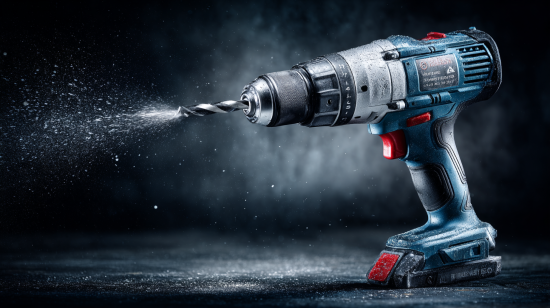

BAUER 7.5 Amp, 1/2 in. Variable-Speed Hammer Drill
- The BAUER™ 1/2 in., 7.5 Amp Variable-Speed Reversible Hammer Drill delivers the power to drill through concrete, wood, and steel. The 7.5 amp motor ensures powerful performance in a wide variety of materials. 45,000 BPM in hammer drill mode maximizes impact energy to blast through concrete, stone, and masonry. The adjustable 360° side handle delivers maximum comfort and a secure hold while hammering. Features variable-speed trigger with reverse switch and lock-on for continuous use.
- 7.5 amp motor ensures powerful performance
- Heavy duty 1/2 in. keyed chuck for the most rugged applications
- 45,000 BPM in hammer drill mode maximizes impact energy
- Depth stop rod for consistent, accurate holes
- Easily switch between hammer drill and drill-only modes
- Variable-speed reversible trigger with lock-on for continuous use
- Adjustable 360° side handle for maximum comfort and control
- Chuck key storage reduces the occurrence of lost chuck keys
$44.99

BAUER 12.5 Amp, 23 lb. SDS-MAX Type Demolition Hammer
- With an impact rate of 1900 BPM with 11.1 ft-lbs of impact energy, this demolition hammer powers through concrete and mortar with ease. With industry-leading anti-vibration control, this high-powered demo hammer gets the job done without wearing you out.
- Hard-hitting 12.5 amp motor ensures powerful performance
- Variable-speed control dial matches speed to application
- 1900 BPM impact rate with 11.1 ft-lbs of impact force to pound through the toughest concrete and masonry
- Adjustable 360° side handle for maximum comfort and control
- Anti-vibration control
- Accepts industry-standard SDS Max-Type bits
- Ergonomic handle with shock-absorbent anti-vibration technology prevents strain and fatigue
- Quick-change bit retention
- Ball bearing construction for longer tool life
$299.99

HERCULES 14 Amp, 1-7/8 in. SDS-MAX Type Variable-Speed Rotary Hammer with Maximum Vibration Control
- Tackle the toughest jobs with the HERCULES® SDS-MAX Type Variable-Speed Rotary Hammer. Equipped with a high-performance 14 amp motor and a grease-packed gear box with hardened gears for superior life and durability, this tool is capable of withstanding the toughest jobsite conditions. Anti-vibration technology delivers hours of hard use with minimal fatigue. The convenient selector knob switches between rotary hammer and demo modes. The electronically controlled motor maintains constant power under load to keep the hammer at top performance during heavy applications.
- 14 amp motor delivers up to 2800 BPM of striking power
- Electronically controlled motor maintains constant speed under load
- 2 power modes – rotary hammer or demo
- Heavy duty hardened gears with grease-packed gearbox for superior life in tough conditions
- Variable-speed control dial accurately matches speed to application
- SDS-MAX type chuck provides ultimate bit retention and handles the toughest applications
- Adjustable 360° auxiliary handle for maximum comfort and control
- Shock-absorbent anti-vibration handle prevents strain and fatigue
- Indicator light alerts the user when carbon brushes need to be replaced
$449.99

HERCULES 20V Brushless Cordless, 1/2 in. Compact Hammer Drill/Driver – Tool Only
- Built with a high-performance brushless motor, this HERCULES™ 20V Brushless Cordless, 1/2 in. Compact Variable-Speed Hammer Drill/Driver delivers 80% more power* at 1200 in-lbs of max. torque to drill through tough concrete and masonry jobs. The 2-speed transmission and 14 clutch settings allows the user to match drilling speed and power to the application for accuracy and precision into all materials. An all-metal JACOBS 1/2 in. ratcheting chuck provides a tight grip on your bits so you won’t have to stop and adjust in the middle of your work. With all-metal gear construction, this tool is heavy duty and ready to withstand tough conditions on the jobsite. Feel the comfort and reduced fatigue of the well-balanced tool with textured overmold grip that makes all-day jobs easier.
- High-performance brushless motor provides more torque, more runtime, and more durability over brushed motors, drilling up to 110 holes on a single charge**
- 2-speed transmission covers all drilling and driving applications
- 14 clutch settings for control over the drive depth of the fastener
- All-metal gear construction withstands heavy duty applications
- Delivers 0 to 32,000 blows per minute, ideal for drilling in masonry and concrete
- Textured overmold for secure grip and comfort
- Detachable side handle maximizes control in high torque work
- Bright LED light provides superior work visibility
- Get more work done with fewer battery swaps, more power, and the comfort of a well-balanced tool
- 5 year warranty
$79.99

BAUER 20V Brushless Cordless, 1/2 in. Hammer Drill – Tool Only
- BAUER™ 20V Brushless Cordless, 1/2 in. Hammer Drill delivers 25% more torque* for drilling tough concrete or masonry. The hammer drill delivers 0-5,800/0-23,000 BPM for dependable power and performance. The durable all-metal gear construction ensures heavy duty performance for daily use. The convenient LED light gives you a clear view in dark spaces.
- 1/2 in. all-metal keyless chuck for quick and easy bit changes
- All-metal gear construction improves life and durability
- 2-speed selector matches speed and power to application
- High-performance motor covers all drilling, hammer drilling, and fastening jobs
- Compact, lightweight design minimizes user fatigue
- Textured overmold for secure grip and comfort
- Bright LED light illuminates work area for increased visibility
$49.99
Everything You Need to Know Before Making Your Next Power Tool Investment
When I first stepped into the world of serious DIY projects five years ago, I thought all drills were created equal. How wrong I was! My wake-up call came during a weekend project when I tried to hang heavy shelves on my brick fireplace wall using my regular cordless drill. After an hour of frustrated attempts and a completely worn-out drill bit, I realized I was fighting a losing battle. That’s when my neighbor introduced me to the game-changing world of hammer drills.
Since then, I’ve owned, tested, and worked with dozens of hammer drills across various brands, power levels, and applications. From lightweight cordless models for weekend warriors to heavy-duty corded beasts for professional contractors, I’ve learned what separates the exceptional from the mediocre. This comprehensive buying guide for hammer drill will save you from the costly mistakes I made early on and help you choose the perfect tool for your specific needs.
What is a Hammer Drill Used For?
The beauty of a hammer drill lies in its versatility and raw power. Unlike its gentler cousin, the regular drill, a hammer drill combines rotational motion with rapid hammering action, making it the go-to tool for tough materials that would laugh at conventional drills.
During my years of home improvement projects, I’ve found hammer drills indispensable for mounting heavy fixtures to concrete walls, installing outdoor lighting on brick surfaces, and creating precise holes in stone foundations. The hammering action literally pulverizes the material as the bit rotates, allowing you to power through concrete, brick, stone, and masonry with surprising ease.
One of my most memorable projects involved installing a pergola in my backyard. The concrete footings required dozens of anchor holes, each needing to be perfectly sized and precisely placed. My hammer drill turned what could have been a grueling multi-day ordeal into a manageable afternoon project. The clean, precise holes it created ensured my anchors seated properly, giving me confidence in the structure’s long-term stability.
Professional contractors rely on hammer drills for everything from electrical installations in commercial buildings to plumbing rough-ins in concrete slabs. The tool’s ability to maintain consistent performance across hundreds of holes makes it invaluable for large-scale projects where precision and speed are equally important.
How Does a Hammer Drill Work?
Understanding the mechanical brilliance behind a hammer drill helped me appreciate why these tools perform so dramatically better than regular drills on hard materials. The secret lies in the dual-action mechanism that occurs simultaneously during operation.
The rotational component works exactly like a standard drill, turning the bit to cut through material. However, the magic happens with the hammering mechanism, which typically operates through one of two systems: cam-action or electro-pneumatic.
In cam-action systems (found in most consumer and semi-professional models), two toothed metal discs called cams work together as the drill operates. As the motor turns, these cams slide against each other, creating rapid forward and backward motion that translates into the hammering action. The frequency of these impacts can reach thousands per minute, essentially chiseling away at the material while the bit rotates.
Professional-grade models often use electro-pneumatic systems, where a piston creates the hammering action through compressed air. This design delivers more powerful blows with less vibration transfer to the user, making it ideal for extended use or particularly demanding applications.
What fascinated me most during my research was learning that the hammering action isn’t just about force—it’s about frequency and precision. A quality hammer drill synchronizes these impacts perfectly with the bit’s rotation, ensuring each blow lands optimally to maximize material removal while minimizing bit wear.
What is the Difference Between a Hammer Drill and a Regular Drill?
Having used both extensively, I can tell you the differences go far beyond just the hammering feature. When I hold my regular cordless drill alongside my hammer drill, the weight difference is immediately apparent. Hammer drills are typically heavier due to the additional internal mechanisms required for the hammering action.
The chuck systems also differ significantly. While regular drills often use keyless chucks optimized for quick bit changes, hammer drills frequently feature SDS (Special Direct System) chucks that lock bits more securely and transfer hammering energy more efficiently. Learning to use SDS bits was initially frustrating, but I quickly grew to appreciate their superior holding power and energy transfer.
Performance-wise, the gap becomes obvious when drilling into hard materials. My regular drill struggles with anything harder than softwood or thin metal, while my hammer drill powers through concrete like it’s cutting through butter. However, for delicate work like drilling pilot holes in cabinetry, the regular drill’s gentler touch proves superior.
Speed settings represent another key difference. Regular drills typically offer variable speed control optimized for different materials and bit sizes. Hammer drills also provide speed control, but they add the crucial hammer-only mode for chiseling applications and the ability to disable hammering for use on softer materials.
The ergonomics differ as well. Hammer drills generally feature more robust grip designs and better vibration dampening systems, acknowledging that users will encounter more resistance and feedback during operation. This became particularly important during a recent basement renovation project where I spent entire days drilling mounting holes—the superior ergonomics prevented the hand fatigue that would have been inevitable with a regular drill.
What is the Best Hammer Drill for Home Use?
After testing numerous models over the years, I’ve learned that the best hammer drill for home use depends heavily on your specific project types, frequency of use, and budget constraints. However, certain characteristics consistently prove valuable for homeowners.
For most DIY enthusiasts, I recommend starting with a mid-range cordless model offering 18-20 volts of power. This provides sufficient performance for typical home projects while maintaining the convenience of cordless operation. The sweet spot seems to be around 600-800 BPM (blows per minute) with 20-25 foot-pounds of torque.
During my own tool evolution, I discovered that adjustable impact settings make a significant difference. Being able to dial down the hammering action for lighter materials or increase it for stubborn concrete gives you remarkable versatility. Some of my favorite models include three-mode operation: drill-only, hammer-drill, and hammer-only for chiseling applications.
Battery life deserves special consideration for home users. Unlike professionals who might have multiple batteries in rotation, homeowners typically want to complete projects without interruption. Look for models with lithium-ion batteries rated for at least 3.0 Ah capacity, and consider packages that include two batteries if your budget allows.
Weight becomes crucial for overhead work or extended use. While professional models might prioritize raw power over weight, home users benefit from lighter designs that reduce fatigue during typical DIY projects. I’ve found that models weighing between 3-4 pounds offer the best balance of power and comfort for most applications.
How to Use a Hammer Drill Properly?
Learning proper hammer drill technique took me several frustrating projects and a few expensive mistakes. The key insight that transformed my success rate was understanding that hammer drilling requires a different approach than regular drilling.
The first critical element is pressure application. My initial instinct was to push harder when encountering resistance, but I quickly learned that excessive pressure actually reduces drilling efficiency and increases bit wear. Instead, maintain steady, moderate pressure and let the tool do the work. The hammering action is designed to break up material, not to be forced through it.
Bit selection proves equally important. I made the expensive mistake of using regular twist bits in my hammer drill during my early projects. Masonry bits with carbide tips are essential for concrete and brick work, while SDS bits provide superior performance and longevity for heavy-duty applications.
Starting technique makes or breaks your results. I always begin drilling at a slight angle to create a small pilot indentation, then straighten the drill once the bit catches. This prevents the bit from skating across smooth surfaces and ensures precise hole placement.
Speed control requires nuance that comes with experience. Start at lower speeds to establish the hole, then increase speed as you progress deeper. Different materials respond best to different speed ranges—soft brick might prefer higher speeds, while hard concrete benefits from moderate speeds with maximum hammer impact.
Debris management often gets overlooked but dramatically affects performance. I learned to periodically withdraw the bit while drilling to clear debris from the hole. This prevents clogging, reduces overheating, and maintains optimal drilling speed.
Can a Hammer Drill Be Used for Concrete?
Absolutely! In fact, drilling concrete represents one of the primary applications where hammer drills truly shine. However, success depends on using the right approach, bits, and techniques specific to concrete work.
My most challenging concrete project involved installing a home theater system in my basement, requiring dozens of holes through 6-inch concrete walls for wire routing and equipment mounting. Regular drills would have been completely inadequate, but my hammer drill handled the job efficiently.
Concrete hardness varies significantly depending on age, composition, and additives. Fresh concrete (less than 28 days old) drills relatively easily, while older, fully-cured concrete presents maximum resistance. I’ve encountered concrete so hard that even quality masonry bits required replacement after just a few holes.
Bit selection becomes critical for concrete work. Standard masonry bits work adequately for lighter concrete applications, but serious concrete drilling demands carbide-tipped SDS bits. These bits cost more initially but deliver superior performance and longevity. I typically keep several sizes in my toolkit: 1/4-inch for small anchors, 3/8-inch for medium fixtures, and 1/2-inch for heavy-duty applications.
Drilling technique for concrete requires patience and proper rhythm. I maintain steady pressure while allowing the bit to advance gradually. Forcing the process generates excessive heat, dulls bits prematurely, and can damage the hammer mechanism. The key is finding the sweet spot where the bit advances steadily without bogging down.
Water cooling becomes necessary for large or deep holes in concrete. I sometimes use a spray bottle to keep the bit cool during extended drilling sessions. This prevents overheating, extends bit life, and often improves drilling speed by helping clear debris from the hole.
What are the Different Types of Hammer Drills?
Understanding the various types of hammer drills available helps you select the right tool for your specific applications and budget. Through my years of tool collecting and project work, I’ve used representatives from each major category.
Corded hammer drills remain the workhorses for heavy-duty applications. These tools provide unlimited runtime and typically deliver more power than their cordless counterparts. I rely on my corded model for major renovation projects where consistent performance across hundreds of holes is essential. The constant power delivery proves invaluable when drilling large-diameter holes or working with particularly stubborn materials.
Cordless hammer drills offer unmatched convenience for most home projects. Modern lithium-ion battery technology has largely closed the power gap with corded models, making them suitable for the majority of DIY applications. I find myself reaching for cordless models for projects involving multiple locations or areas without convenient electrical access.
SDS hammer drills represent a step up in performance and capability. The SDS chuck system locks bits more securely and transfers energy more efficiently than conventional chucks. While the bits cost more and require a different approach, the performance improvement for serious concrete work justifies the investment.
Rotary hammers blur the line between hammer drills and demolition tools. These powerful machines excel at drilling large holes or breaking up concrete and masonry. I borrowed one for a major foundation project and was amazed by its ability to drill 1-inch holes through reinforced concrete with minimal effort.
Combination drill-drivers with hammer functions attempt to provide versatility in a single tool. While convenient for users with limited storage space, these compromises typically perform each function adequately rather than excelling at any particular application.
What is the Difference Between a Hammer Drill and a Rotary Hammer?
The distinction between hammer drills and rotary hammers confused me initially, as both tools hammer and rotate simultaneously. However, after using both extensively, the differences become clear and significant.
Power delivery represents the most obvious difference. Rotary hammers generate substantially more impact energy per blow, typically measuring in foot-pounds rather than the inch-pounds common with hammer drills. This translates to dramatically faster drilling in heavy concrete and the ability to handle larger-diameter holes that would bog down hammer drills.
Chuck systems differ fundamentally between the two tool types. While hammer drills often use standard chucks or basic SDS systems, rotary hammers typically employ SDS-Plus or SDS-Max chucks designed for maximum energy transfer. The bits for rotary hammers cost more but deliver superior performance and longevity.
Size and weight distinctions are immediately apparent when handling both tools. Rotary hammers are generally larger and heavier, reflecting their more robust internal mechanisms. This makes them less suitable for overhead work or extended handheld use but ideal for applications requiring maximum power.
Application scope differs significantly between the tools. While my hammer drill handles typical home improvement projects with ease, the rotary hammer excels at commercial construction, major renovations, and applications involving thick concrete or masonry. The rotary hammer’s ability to switch between drilling and dedicated chiseling modes makes it valuable for demolition work.
Price points reflect the performance differences. Quality rotary hammers typically cost significantly more than comparable hammer drills, making them harder to justify for occasional home use. However, for users regularly working with thick concrete or large-diameter holes, the investment pays dividends in time savings and reduced effort.
What Size Hammer Drill Do I Need?
Determining the right hammer drill size depends on balancing power requirements, portability needs, and intended applications. Through trial and error across numerous projects, I’ve learned that bigger isn’t always better.
Voltage ratings provide a general indication of power capability in cordless models. For light home use involving occasional masonry work, 12-volt models often suffice. However, I’ve found 18-20 volt models hit the sweet spot for most DIY applications, providing adequate power while maintaining reasonable weight and battery life.
Chuck capacity determines the maximum bit shank diameter your drill can accommodate. Most home users find 1/2-inch chucks adequate for typical projects, while heavy-duty applications might require 3/4-inch or even 1-inch chuck capacity. I’ve rarely needed anything larger than 1/2-inch for home projects.
Physical size becomes important for working in confined spaces or overhead applications. Compact models sacrifice some power for improved maneuverability, while full-size models prioritize maximum performance. My tool collection includes both types, choosing based on specific project requirements.
Power ratings in corded models are measured in amperage, with higher numbers generally indicating more capability. For most home applications, 6-8 amp models provide sufficient power, while professional applications might require 10+ amp models.
Weight considerations become crucial for extended use or overhead work. I’ve learned that saving a pound or two in tool weight can make the difference between completing a project comfortably and experiencing significant fatigue. However, lighter tools sometimes sacrifice power or durability.
How Much Does a Hammer Drill Cost?
Hammer drill pricing spans an enormous range, from basic models under $50 to professional-grade tools exceeding $300. Understanding what drives these price differences helps you invest appropriately for your needs.
Entry-level models ($30-80) typically offer basic hammering functionality with limited power and durability. While these tools can handle light masonry work, they often struggle with harder materials or extended use. I started with a budget model and quickly outgrew its limitations.
Mid-range options ($80-180) represent the sweet spot for most home users. These tools typically offer adequate power, reasonable durability, and useful features like variable speed control and multiple operating modes. My current go-to hammer drill falls in this category and has served reliably across dozens of projects.
Professional-grade models ($180-300+) justify their premium pricing through superior power, enhanced durability, and advanced features. While overkill for occasional home use, they prove cost-effective for frequent users or demanding applications.
Cordless vs. corded pricing follows predictable patterns. Cordless models cost more initially due to battery and charger inclusion, but they offer superior convenience. Factor in replacement battery costs when calculating long-term ownership expenses.
Kit vs. bare tool pricing can significantly impact initial investment. Starter kits including batteries, chargers, and cases often provide better value than purchasing components separately. However, users already invested in a particular battery platform might prefer bare tools to maintain compatibility.
What is the Best Drill Bit to Use with a Hammer Drill?
Selecting appropriate drill bits for hammer drills dramatically affects performance, efficiency, and results. My early projects suffered from poor bit choices until I learned to match bits precisely to applications and materials.
Masonry bits with carbide tips represent the standard choice for concrete and brick work. The carbide cutting edges withstand the abuse of hammering while maintaining sharpness through dozens of holes. I keep a complete set ranging from 1/8-inch to 3/4-inch for various anchor and fastener requirements.
SDS bits provide superior performance in compatible hammer drills through improved energy transfer and bit retention. While more expensive than standard masonry bits, they drill faster, last longer, and reduce user fatigue. The SDS system’s positive locking eliminates the bit slippage that occasionally plagued my early projects.
Bit geometry affects drilling performance in subtle but important ways. Bits with aggressive flute designs clear debris more effectively, while optimized tip angles reduce drilling resistance. I’ve learned to match bit design to specific materials—aggressive bits for soft brick, more conservative designs for hard concrete.
Bit quality varies dramatically between manufacturers and price points. Premium bits cost significantly more but often drill multiple times more holes before requiring replacement. For frequent users, the mathematics clearly favor quality bits despite higher initial investment.
Specialized bits serve specific applications that generic masonry bits handle poorly. Glass and tile bits prevent cracking in delicate materials, while extended-length bits reach through thick walls. Building a comprehensive bit collection takes time but dramatically expands project capabilities.
Can a Hammer Drill Be Used as a Regular Drill?
One of the most practical advantages of owning a hammer drill is its versatility for non-masonry applications. Most modern hammer drills include modes that disable the hammering action, essentially converting them into powerful regular drills.
Mode selection typically involves a simple switch or dial that locks out the hammering mechanism. In drill-only mode, these tools perform admirably for wood, metal, and plastic applications. I frequently use my hammer drill for standard drilling tasks when my regular drill isn’t readily available.
Performance differences compared to dedicated drills are generally minor for most applications. Hammer drills might feel slightly heavier or less refined for delicate work, but they provide adequate precision for typical drilling tasks. The additional power often proves beneficial when drilling large holes or working with hard materials.
Speed control in drill-only mode functions similarly to regular drills, allowing you to match drilling speed to material requirements. Lower speeds work better for metal and large bits, while higher speeds suit small holes in wood and plastic.
Chuck compatibility allows use of standard drill bits when the hammer drill operates in drill-only mode. However, some SDS-equipped models require adapter chucks to accept regular bits, adding cost and complexity.
Limitations do exist when using hammer drills as regular drills. The additional weight and bulk make them less suitable for precision work or extended overhead use. Additionally, the optimized gear ratios for hammering might not provide ideal speed ranges for all drilling applications.
What is the Difference Between a Corded and Cordless Hammer Drill?
The corded vs. cordless hammer drill decision represents one of the most important choices when selecting a tool. Having used both extensively, I can outline the key trade-offs that should influence your decision.
Power delivery represents the most significant technical difference. Corded models provide unlimited, consistent power that doesn’t diminish during use. This proves crucial for extended drilling sessions or particularly demanding materials. My corded hammer drill maintains peak performance through hundreds of holes, while cordless models might show reduced power as batteries drain.
Convenience factors heavily favor cordless models for most home applications. The freedom to work anywhere without electrical access proves invaluable for outdoor projects, attic work, or locations with limited outlets. I find myself using cordless tools far more frequently due to their grab-and-go convenience.
Runtime considerations affect project planning significantly. Corded tools operate indefinitely, while cordless models require battery management and charging downtime. For major projects involving dozens of holes, I often rely on corded tools to avoid work interruptions.
Weight differences are immediately apparent when handling both tool types. Cordless models carry the additional weight of batteries, making them less suitable for overhead work or extended use. However, the elimination of power cords reduces snag hazards and improves maneuverability in tight spaces.
Cost factors include initial purchase price and ongoing operational expenses. While corded models typically cost less initially, cordless tools require battery replacements every few years. Factor in replacement battery costs when calculating long-term ownership expenses.
How to Choose the Right Hammer Drill for Heavy-Duty Work?
Selecting a hammer drill for heavy-duty applications requires prioritizing performance characteristics that prove crucial under demanding conditions. My experience with major renovation projects taught me which features matter most when tools face serious abuse.
Power specifications become paramount for heavy-duty work. Look for models delivering high BPM (blows per minute) ratings combined with substantial torque output. Professional-grade tools often specify impact energy in joules, providing a more meaningful measure of drilling capability than simple BPM figures.
Durability features distinguish tools capable of surviving job site abuse. Metal gear housings, brushless motors, and sealed bearings extend tool life significantly compared to economy models. While these features increase initial cost, they prove cost-effective for frequent users through reduced replacement and repair expenses.
Heat management becomes critical during extended use or large hole drilling. Quality tools incorporate effective cooling systems and thermal protection to prevent overheating damage. I’ve experienced several tool failures from overheating during marathon drilling sessions with inadequate models.
Ergonomic design affects user comfort and safety during heavy use. Anti-vibration systems, comfortable grips, and balanced weight distribution reduce fatigue and improve control. These features become increasingly important as project duration and intensity increase.
Chuck quality significantly impacts performance and bit retention under heavy loads. SDS chucks generally outperform standard chucks for serious masonry work, providing better energy transfer and reduced bit slippage. The investment in compatible bits pays dividends through improved performance and longevity.
How to Drill into Brick or Masonry with a Hammer Drill?
Drilling brick and masonry successfully requires specific techniques that differ from standard drilling procedures. My mastery of these techniques came through numerous projects and several expensive mistakes that taught valuable lessons.
Surface preparation often gets overlooked but significantly affects results. Clean surfaces free of paint, mortar, or debris allow bits to establish initial purchase more effectively. I use a wire brush or scraper to prepare drilling surfaces, particularly on older masonry with accumulated coatings.
Marking and layout accuracy becomes crucial since masonry holes are difficult to relocate if positioned incorrectly. I use a center punch or masonry nail to create pilot indentations that prevent bit skating during startup. Double-checking measurements prevents costly mistakes that plague rushed projects.
Starting technique requires patience and proper approach. Begin drilling at a slight angle to establish bit engagement, then gradually straighten to vertical. This prevents the bit from skating across smooth surfaces and ensures precise hole placement. Starting too aggressively often results in bit breakage or wandering holes.
Drilling rhythm affects both speed and bit longevity. I maintain steady pressure while allowing the bit to advance gradually. Excessive pressure generates heat, dulls bits prematurely, and can damage the hammer mechanism. The optimal approach lets the tool work at its designed pace rather than forcing progress.
Debris management dramatically impacts drilling efficiency. I periodically withdraw the bit to clear accumulated dust and debris from the hole. This prevents clogging, reduces overheating, and maintains optimal drilling speed. A shop vacuum can help clear debris from deep holes.
What Safety Precautions Should I Follow When Using a Hammer Drill?
Hammer drill safety encompasses multiple areas that protect both users and equipment. My years of experience included several close calls that reinforced the importance of proper safety protocols.
Eye protection represents the most critical safety requirement. Hammer drilling generates substantial debris that can cause serious eye injury. Quality safety glasses with side shields are essential, while enclosed safety goggles provide superior protection for heavy-duty applications. I learned this lesson the hard way during my first major masonry project.
Hearing protection becomes necessary during extended use or work in enclosed spaces. Hammer drills generate significant noise levels that can damage hearing over time. Foam earplugs or noise-reducing headphones provide adequate protection while allowing you to hear important audio cues from the tool.
Respiratory protection prevents inhalation of harmful dust particles generated during masonry drilling. Dust masks or respirators are essential when working with concrete, brick, or stone materials. Some masonry materials contain silica or other hazardous substances that pose serious health risks.
Secure workpiece positioning prevents dangerous tool kickback or workpiece movement. Clamp or brace materials whenever possible to prevent sudden shifting during drilling. Free-hand drilling should be limited to situations where secure positioning isn’t practical.
Electrical safety requires attention to cord condition and GFCI protection when using corded models. Inspect power cords before each use and replace damaged cords immediately. GFCI protection is essential for damp environments or outdoor applications.
How to Maintain and Clean a Hammer Drill?
Proper hammer drill maintenance extends tool life significantly while ensuring peak performance across thousands of uses. My maintenance routine evolved through experience with multiple tools and learning from premature failures caused by neglect.
Regular cleaning prevents debris accumulation that can damage internal components. After each use, I blow out air vents and remove accumulated dust using compressed air or a shop vacuum. Pay particular attention to the chuck area where masonry dust tends to accumulate.
Chuck maintenance involves periodic cleaning and lubrication to ensure smooth operation and proper bit retention. Remove and clean chuck components according to manufacturer instructions, applying appropriate lubricants to moving parts. This prevents seizure and extends chuck life significantly.
Brush inspection in brushed motors requires periodic attention to maintain optimal performance. Worn brushes reduce power and can damage commutator segments if allowed to wear completely. Replace brushes when they reach minimum length specifications or show excessive wear.
Battery care for cordless models dramatically affects tool longevity and performance. Store batteries in cool, dry conditions and avoid complete discharge cycles that can damage lithium-ion cells. Regular charging maintains battery health and ensures tools are ready when needed.
Professional servicing becomes necessary for major repairs or when tools show performance degradation. Annual professional maintenance for heavily-used tools often prevents major failures and extends useful life. Document service history to track patterns and plan replacements appropriately.
What is the Typical RPM of a Hammer Drill?
Understanding hammer drill RPM specifications helps you select appropriate tools and use them effectively across different applications. The relationship between RPM, BPM, and material types became clearer as I gained experience with various models and projects.
RPM ranges vary significantly between hammer drill models and manufacturers. Most consumer models operate between 0-1,500 RPM, while professional tools might reach 2,000+ RPM. The variable speed control allows matching drilling speed to material requirements and bit sizes.
BPM ratings (blows per minute) represent equally important specifications for hammer drill performance. Typical models deliver 8,000-30,000 BPM, with higher frequencies generally providing faster drilling in hard materials. The optimal combination of RPM and BPM depends on specific application requirements.
Material-specific speeds optimize performance and bit life across different masonry types. Soft brick typically responds well to higher RPM settings, while hard concrete benefits from moderate RPM with maximum hammer impact. I’ve learned to adjust settings based on material feedback during drilling.
Bit size relationships affect optimal RPM selection significantly. Larger bits generally require lower RPM to prevent overheating and maintain control, while smaller bits can operate at higher speeds. This relationship becomes particularly important when drilling holes larger than 1/2-inch diameter.
Load sensitivity in quality hammer drills automatically adjusts RPM based on drilling resistance. This feature prevents stalling while optimizing drilling speed for current conditions. Less sophisticated models require manual speed adjustment as drilling conditions change.
What are Common Mistakes When Using a Hammer Drill?
Learning from common hammer drill mistakes saved me considerable time, money, and frustration across numerous projects. These errors are surprisingly easy to make but equally easy to avoid with proper knowledge and techniques.
Using incorrect bits represents the most frequent mistake I observe among new hammer drill users. Regular twist bits cannot withstand hammering forces and will break quickly when used in hammer mode. Always use masonry bits with carbide tips for concrete and brick applications.
Excessive pressure application actually reduces drilling efficiency while increasing bit wear and tool stress. Many users instinctively push harder when encountering resistance, but hammer drills work best with moderate, consistent pressure that allows the hammering action to function properly.
Wrong speed selection can cause bit breakage, poor hole quality, or excessive tool wear. Starting at high speeds often causes bits to overheat or break, while insufficient speed prevents proper debris clearing. Begin at moderate speeds and adjust based on material response.
Neglecting debris clearing leads to clogged holes, overheated bits, and reduced drilling efficiency. Periodically withdraw the bit to clear accumulated dust and debris, particularly when drilling deep holes or working with particularly dusty materials.
Inadequate bit cooling during extended drilling can destroy expensive carbide bits. Allow bits to cool between holes or use water cooling for large diameter or deep holes. Overheated bits lose their cutting edge and require premature replacement.
Can a Hammer Drill Be Used for Wood or Metal?
The versatility of modern hammer drills for wood and metal applications often surprises new users. While these tools excel at masonry work, their ability to handle other materials makes them valuable additions to any workshop or toolbox.
Wood drilling becomes straightforward when the hammer function is disabled. Most hammer drills include drill-only modes that eliminate hammering while maintaining the rotational power needed for wood applications. I frequently use my hammer drill for large-diameter holes that would bog down smaller drills.
Speed control proves crucial for wood applications, particularly when using large bits or drilling hardwood species. Lower speeds prevent tear-out and provide better control, while higher speeds work well for small holes in softwood. The variable speed control found on most hammer drills provides adequate flexibility for wood working.
Metal drilling requires attention to speed and bit selection but works well with hammer drills in drill-only mode. Use high-speed steel bits designed for metal applications, and maintain moderate speeds to prevent overheating. The additional power of hammer drills proves beneficial when drilling thick metal or large holes.
Bit compatibility allows use of standard wood and metal bits when operating in drill-only mode. However, some SDS-equipped models require chuck adapters to accept standard bits. Factor in this additional cost and complexity when evaluating hammer drill versatility.
Performance considerations include the additional weight and bulk of hammer drills compared to dedicated wood/metal drills. While capable of handling these applications, hammer drills might feel less refined for precision work or extended use on softer materials.
Conclusion: Making Your Perfect Hammer Drill Choice
After five years of intensive hammer drill use across dozens of projects, I’ve learned that the perfect hammer drill doesn’t exist—only the perfect drill for your specific needs, budget, and applications. The key lies in honestly assessing your requirements and investing appropriately.
For weekend warriors tackling occasional home improvement projects, a mid-range cordless model with 18-20 volts of power provides excellent versatility without breaking the budget. These tools handle typical masonry work while offering convenience for general drilling applications.
Serious DIY enthusiasts and semi-professional users benefit from investing in higher-capacity models with advanced features like multiple operating modes, superior ergonomics, and enhanced durability. The additional cost proves worthwhile through improved performance and extended tool life.
Professional contractors and heavy-duty users should prioritize maximum power, durability, and specialized features over cost considerations. These tools face daily abuse and must perform reliably across thousands of holes in demanding materials.
Remember that your hammer drill represents just one component of an effective drilling system. Quality bits, proper technique, and appropriate safety equipment are equally important for achieving professional results safely and efficiently.
The investment in a quality hammer drill pays dividends through years of reliable service, expanded project capabilities, and the satisfaction of completing challenging tasks efficiently. Whether you’re hanging pictures on brick walls or installing concrete anchors for major construction, the right hammer drill transforms difficult tasks into manageable projects.
Take time to research thoroughly, read user reviews, and consider your long-term needs before making your final decision. A well-chosen hammer drill becomes a trusted partner in countless future projects, making the initial investment decision one of the most important tool purchases you’ll make.